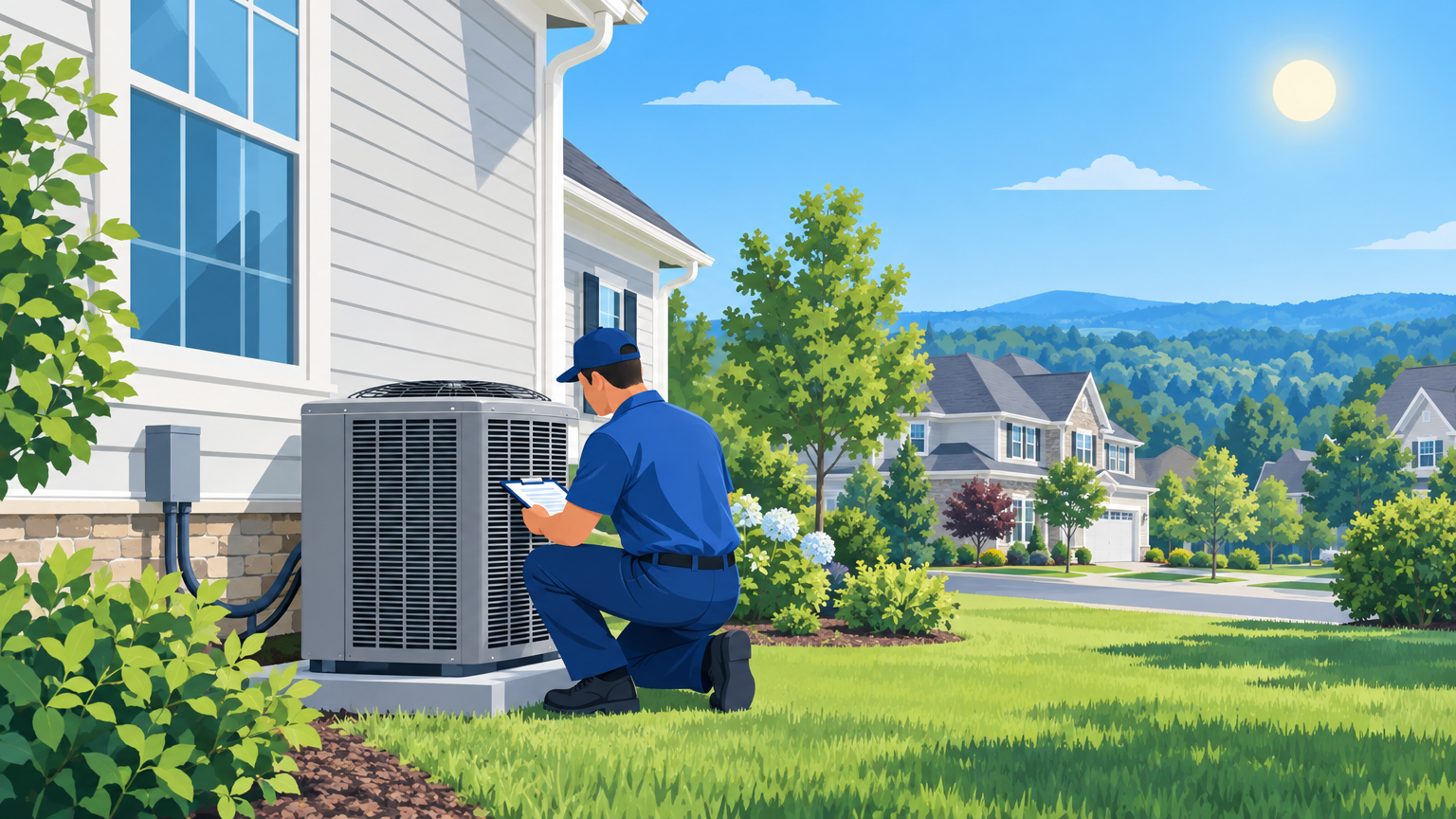
If you need AC repair or installation in Fairfax, VA, most repairs run between $150 and $600, though compressor replacement can reach $2,500. If your system is struggling through another humid summer, the numbers below will help you decide quickly whether to repair, replace, or maintain, and what to budget before you call.
What Does AC Repair Cost in Fairfax, VA?
Most AC repairs in Fairfax run between $150 and $600. The final bill depends on what failed. Refrigerant recharges add $150 to $400 on top of that, and a compressor replacement typically lands between $1,200 and $2,500.
Northern Virginia labor rates run 10 to 15% above the Virginia state average, so Fairfax jobs tend toward the middle and upper portions of those ranges. Every repair bill has three parts: the diagnostic visit, parts, and labor.
Request a written estimate that separates parts from labor before you approve any work. A capacitor costs far less than a compressor, so catching a refrigerant leak early at $150 to $400 beats letting it run until compressor burnout costs $1,200 to $2,500.
| Repair Type | Typical Cost Range |
|---|---|
| Minor repair (capacitor, contactor, condensate drain) | $150–$600 |
| Refrigerant recharge (added to repair cost) | $150–$400 |
| Compressor replacement | $1,200–$2,500 |
How Do You Know When Your AC Needs Repair?
Five measurable signs tell you the system needs attention before it quits entirely. Catching them early almost always costs less than an emergency call during a heat event.
Virginia's residential electricity rate is 15.28 cents per kilowatt-hour, and a well-maintained AC runs 15 to 25% more efficiently than a neglected one. A typical 3-ton central AC in Fairfax costs about $95 per month during peak cooling season. A unit losing efficiency adds meaningfully to that number every month.
- The house will not reach the thermostat setpoint. The system runs continuously but temperature stays above your target.
- Warm air from supply vents, which often points to refrigerant loss or a failing compressor.
- Ice on the refrigerant line, a visible sign of restricted airflow or refrigerant problems.
- Grinding or squealing noises from mechanical wear that does not resolve on its own.
- A power bill that climbs without explanation. A struggling system draws more current to do the same work.
Fairfax humidity and seasonal timing
In 2025, the DC metro region logged more than 650 hours of dew points above 70°F between June and mid-July, compared with a historical average of 276 hours. That moisture load forces the system to run longer cycles to control both temperature and humidity, accelerating wear on every component.
Most Fairfax and Northern Virginia AC breakdowns happen during the first serious heatwave of the season, often in late May or early June, before most homeowners have scheduled a tune-up.
Should You Repair or Replace Your AC?
The standard industry rule: if the repair cost exceeds 50% of the price of a new system and the unit is more than 10 years old, replacement usually makes more financial sense. In Northern Virginia, that threshold arrives sooner than in drier climates.
HVAC systems in Northern Virginia realistically last 12 to 15 years, compared with 18 to 20 years in low-humidity regions. The sustained humidity load that Fairfax systems carry shortens the lifespan of coils, motors, and electrical components.
A 13-year-old system needing a $1,400 compressor replacement is a strong replacement candidate under the 50% rule. There is also a refrigerant cost factor to weigh.
The R-410A to A2L transition
As of January 1, 2026, new residential AC installations use A2L refrigerants such as R-454B rather than the older R-410A. If your current system runs on R-410A and needs a refrigerant recharge or compressor work, R-410A is no longer produced for new equipment and its availability will narrow over time.
This transition adds roughly 8 to 10% to new equipment costs, but it is a one-time step up rather than an ongoing cost. A newer, properly sized system running at a higher SEER2 rating can bring monthly operating costs down meaningfully over a 12 to 15 year lifespan.
| Situation | Likely Best Move |
|---|---|
| Unit under 10 years old, repair under 50% of replacement cost | Repair |
| Unit 10 to 15 years old, repair under 50% of replacement cost | Repair, add a maintenance plan |
| Unit over 12 to 15 years old (Northern Virginia lifespan), repair over 50% of new system cost | Replace |
| Any age, compressor failure, R-410A system | Evaluate replacement, refrigerant transition factor applies |
How Much Does a New AC Installation Cost in Fairfax, VA?
New central AC installation in Fairfax in 2026 runs $4,500 to $9,500 for most homes, with a typical job around $6,500. That range assumes existing ductwork is in serviceable condition.
Northern Virginia labor and permitting costs run 10 to 15% above the Virginia state average, which pushes Fairfax jobs toward the middle and upper portions of that range. Three factors move the price most: home size and system tonnage, efficiency tier, and the refrigerant transition.
Home size and system tonnage
A larger home needs a larger unit. Oversizing and undersizing both hurt efficiency and comfort, so a proper load calculation matters more than picking a number from a chart.
Efficiency tier and SEER2
The federal minimum for new residential AC installs in the northern region is 13.4 SEER2, in effect since January 1, 2023. Higher-efficiency units cost more upfront and reduce monthly operating costs over the system's life.
At Virginia's 15.28 cents per kWh rate, the math on higher efficiency is worth running for any system expected to last the full 12 to 15 year Northern Virginia average.
Permits and the refrigerant transition
R-454B equipment became the new standard as of January 1, 2026, adding approximately 8 to 10% to equipment costs. Major HVAC installations in Virginia typically require a permit from the local jurisdiction, which a licensed contractor handles as part of the job.
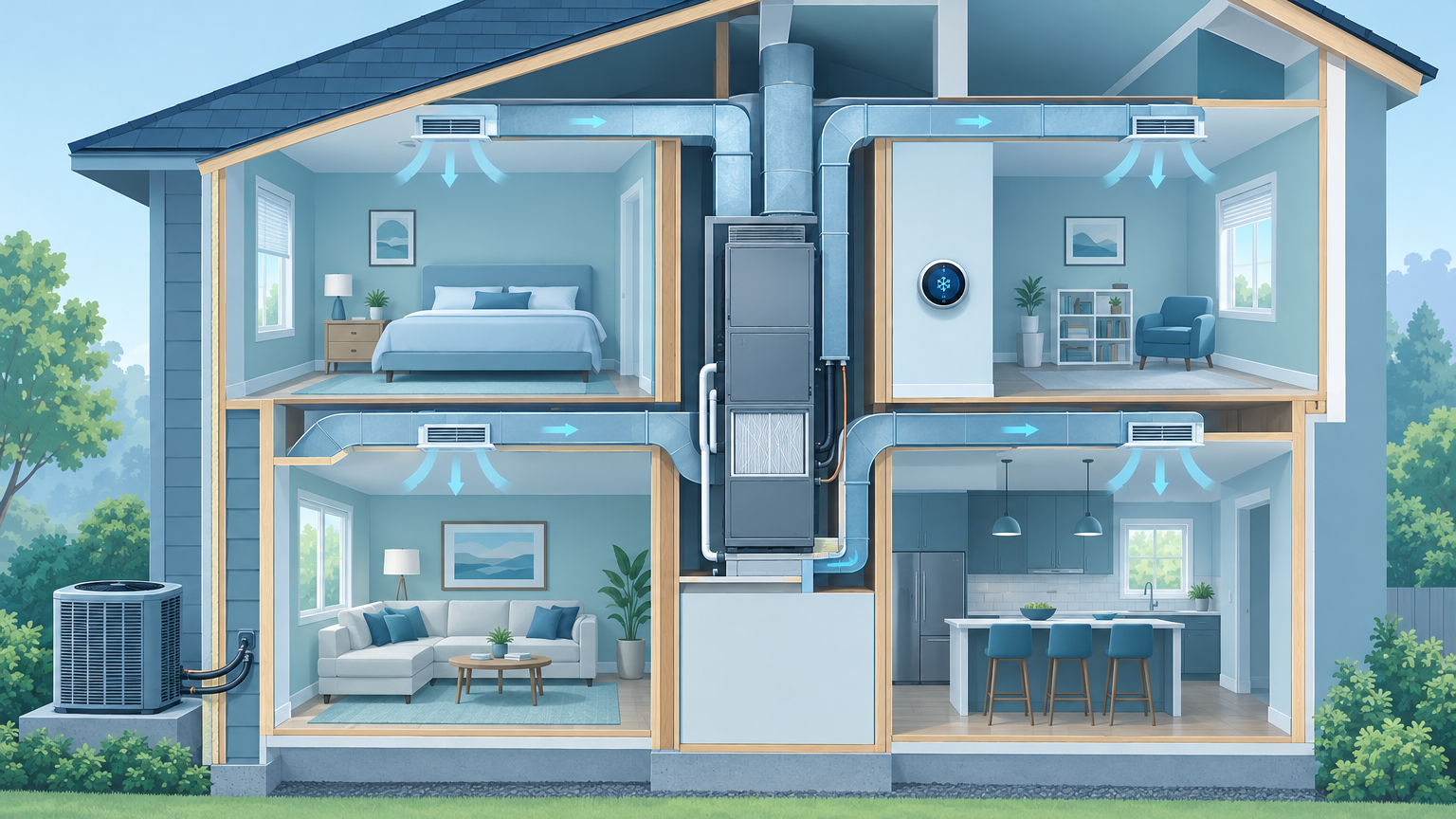
When you get quotes, confirm that permit pulling is included and ask who is responsible for scheduling the inspection. Cool Breeze HVAC Solutions installs central AC systems and heat pumps throughout Fairfax County and Northern Virginia, with smart thermostats and zoning systems available.
What Rebates and Incentives Are Available in Virginia?
The rebate picture changed in 2026. Knowing what is and is not available protects you from acting on outdated information.
Federal 25C tax credit: expired
The residential energy efficiency tax credit under Section 25C expired on December 31, 2025 and does not apply to AC or heat pump installations completed in 2026. If a contractor or website still mentions this credit for a 2026 installation, ask them to confirm the current law before you factor it into your budget.
Dominion Energy Virginia rebates
Dominion runs a Residential Home Retrofit Program that offers variable rebates based on energy audit results. A $50 rebate is available for qualifying smart thermostat installations, and rebate amounts for central AC replacement depend on equipment and the audit process.
Washington Gas dual-fuel heat pump rebate
Northern Virginia customers served by Washington Gas may qualify for up to $2,000 on a dual-fuel heat pump installation. This is one of the stronger incentives currently available in the area for homeowners considering a heat pump.
Virginia HOMES and HEAR programs
Virginia has approximately $188 million allocated through IRA-funded HOMES and HEAR rebate programs, but as of June 2026 these programs had not yet launched. Virginia Energy was still updating program documents to meet federal guidance.
Monitor Virginia Energy's website for a launch announcement before planning a purchase around these funds. The Washington Gas dual-fuel heat pump rebate and Dominion's smart thermostat rebate are the two confirmed available incentives for Northern Virginia homeowners as of this writing.
Why Annual AC Maintenance Matters More in Fairfax
Fairfax has a mixed mid-Atlantic climate with chilly winters and hot, humid summers. Your AC system goes through a full start-up and shut-down cycle every year and spends the summer fighting humidity levels that more than doubled historical averages in 2025.
A well-maintained AC runs 15 to 25% more efficiently than a neglected one. With Virginia's residential rate at 15.28 cents per kWh and a typical Fairfax household paying about $95 per month to run a central AC during peak season, a 20% efficiency loss adds roughly $19 per month to the power bill.
Most breakdowns happen during the first serious heatwave of the season, often in late May or early June, after a system has sat dormant all winter. A spring tune-up before Memorial Day catches the problems that would otherwise surface when you need the system most.
The Cool Breeze Fairfax Comfort Club
The Fairfax Comfort Club runs $19 per month and includes two tune-ups per year, priority service scheduling, and 15% off repairs and parts. For most Fairfax homeowners running a system through the full cooling and heating cycle each year, the plan pays for itself with a single repair call.
How to Choose an AC Contractor in Fairfax, VA
Price is one factor, but the contractor's process matters as much as the quote. Ask any HVAC company you consider whether they are licensed and insured in Virginia, and whether they will pull the required permits for major installation or replacement work.
Virginia jurisdictions require permits for significant HVAC work, and a permit-free installation is a liability risk for the homeowner. Also ask whether they perform a Manual J load calculation before sizing a replacement system, what warranty they offer on parts and labor separately from the manufacturer's equipment warranty, and whether they have experience with A2L refrigerant systems.
Fairfax County homes vary widely. Older homes may have original ductwork, while newer construction may have more complex zoning needs. A contractor who works regularly in Fairfax County understands the typical configurations and common failure points.
Cool Breeze HVAC Solutions
Cool Breeze HVAC Solutions serves Fairfax County and the broader Northern Virginia area, offering AC repair and installation, heat pump installation and repair, furnace and heating systems, indoor air quality and duct cleaning, and seasonal maintenance. Call (877) 368-4822 or book online to schedule a diagnostic visit or installation estimate.
In perspective
Key facts
- Refrigerant recharges add $150 to $400 on top of repair costs. Source
- Compressor replacement typically costs between $1,200 and $2,500. Source
- Northern Virginia labor rates run 10 to 15% above the Virginia state average. Source
- Virginia's residential electricity rate is 15.28 cents per kilowatt-hour. Source
- A well-maintained AC runs 15 to 25% more efficiently than a neglected one. Source
- A typical 3-ton central AC in Fairfax costs about $95 per month during peak cooling season. Source
- New residential AC installations use A2L refrigerants such as R-454B rather than R-410A as of January 1, 2026. Source
- The A2L refrigerant transition adds roughly 8 to 10% to new equipment costs. Source
- New central AC installation in Fairfax in 2026 runs $4,500 to $9,500 for most homes, with a typical job around $6,500. Source
- The federal minimum for new residential AC installs in the northern region is 13.4 SEER2, in effect since January 1, 2023. Source
- The Section 25C energy efficiency tax credit expired on December 31, 2025. Source
- Dominion Energy Virginia offers a $50 rebate for qualifying smart thermostat installations. Source
- Washington Gas customers may qualify for up to $2,000 on a dual-fuel heat pump installation. Source
- Virginia has approximately $188 million allocated through IRA-funded HOMES and HEAR rebate programs, but as of June 2026 these programs had not yet launched. Source
Frequently asked questions
How long does an AC repair take in Fairfax, VA?
Most standard repairs, such as replacing a capacitor or contactor or flushing a clogged drain line, are completed the same day. A refrigerant recharge typically takes two to three hours. Compressor replacements are more involved and may require one to two days depending on parts availability for your system.
How long does a new AC installation take in Fairfax, VA?
A straightforward replacement on existing ductwork generally takes four to eight hours. Jobs that involve new or modified ductwork, zoning systems, or a heat pump conversion take longer. Your contractor should give you a realistic time estimate when they provide the quote.
What SEER2 rating should I choose for a Fairfax home?
The legal minimum for new installs in the northern region is 13.4 SEER2 as of January 1, 2023. Given that a Fairfax AC runs hard through long, humid summers and Virginia's residential electricity rate is 15.28 cents per kWh, a higher-efficiency model often makes financial sense over a 12 to 15 year system lifespan in this climate.
Is the federal AC tax credit still available in 2026?
No. The Section 25C energy efficiency tax credit expired on December 31, 2025 and does not apply to systems installed in 2026. Check Dominion Energy Virginia's rebate program and monitor Virginia Energy's website for the eventual launch of the state's IRA-funded rebate programs.
How often should I service my AC in Fairfax?
At minimum, once a year before cooling season. Given that Fairfax's 2025 cooling season brought more than double the historical average of high-humidity hours, the stress on your system makes an annual spring tune-up essential rather than optional. The Cool Breeze Fairfax Comfort Club includes two tune-ups per year for $19 per month.
What is the average cost of AC repair in Fairfax, VA?
Most AC repairs in Fairfax, VA fall between $150 and $600. Refrigerant recharges add $150 to $400 on top of that. Compressor replacement runs $1,200 to $2,500. Northern Virginia labor rates run 10 to 15% above the Virginia state average, so Fairfax jobs tend toward the middle and upper end of those ranges.
Do I need a permit for AC installation in Fairfax, VA?
Yes. Major HVAC installations in Virginia require a permit from the local jurisdiction. A licensed contractor pulls the permit and schedules the inspection as part of the job. A permit-free installation is a liability risk for the homeowner, so confirm permit pulling is included before you sign any contract.
How do I know if my AC needs to be replaced or just repaired?
The standard rule is: if the repair cost exceeds 50% of the price of a new system and the unit is more than 10 years old, replacement usually makes more financial sense. In Northern Virginia, HVAC systems realistically last 12 to 15 years due to the sustained humidity load. A 13-year-old system needing a $1,400 compressor replacement is a strong replacement candidate under that rule.